How do solar farms work?
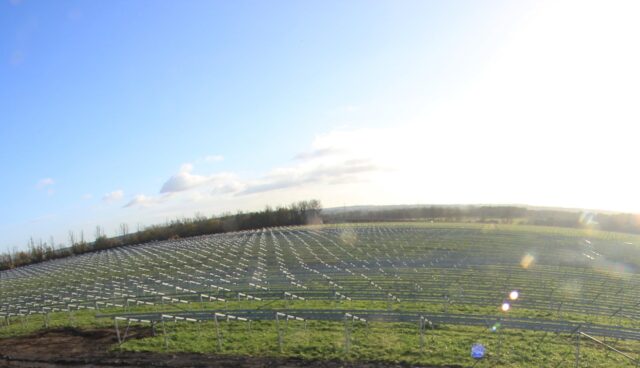
Solar farms are made up of multiple ground mounted solar panels grouped together. In the UK, our solar projects are typically positioned in open landscape and facing south to maximise the amount of direct sunlight they receive. The panels are constructed out of photovoltaic (pv) cells, which are made of semi-conductive materials like silicon.
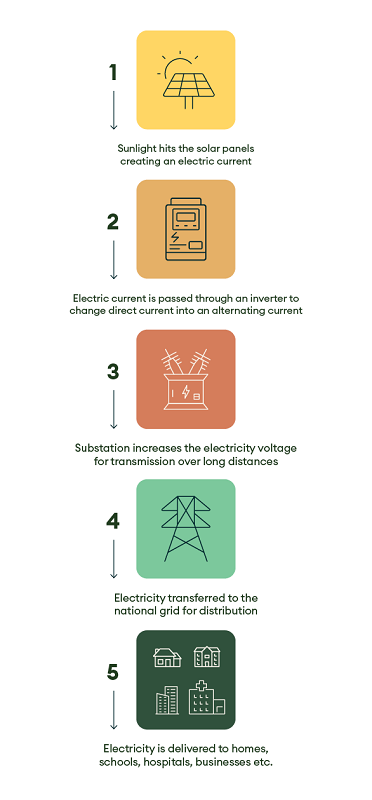
When photons from sunlight hit the panels, they are absorbed by the electrons in the silicon and create an electrical field (known as the photoelectric effect), creating an electric current. This current is then passed into an inverter, where it’s changed from direct current (DC) to alternating current (AC). The electrical energy is sent to a transformer that raises the internal site voltage from 400V to 11–33kV. The transformer then directs the electrical current through underground cables to the solar farm control building and substation, where the voltage can be further increased for export to the national electricity grid via cables and overhead lines.
Our Common Farm Solar Energy Park in Rotherham will have an installed generation capacity of up to 49MWac, enough to meet the average electricity needs of around 18,000 family homes every year. The Solar Energy Park and would also displace over 11,470 tonnes of carbon dioxide from the electricity supply network each year.
We are also in the process of developing Barnsdale Solar Park, just outside of Leeds, with an installed capacity of 40MWac.